In 2010, the men’s fragrance market was at a subtle turning point.
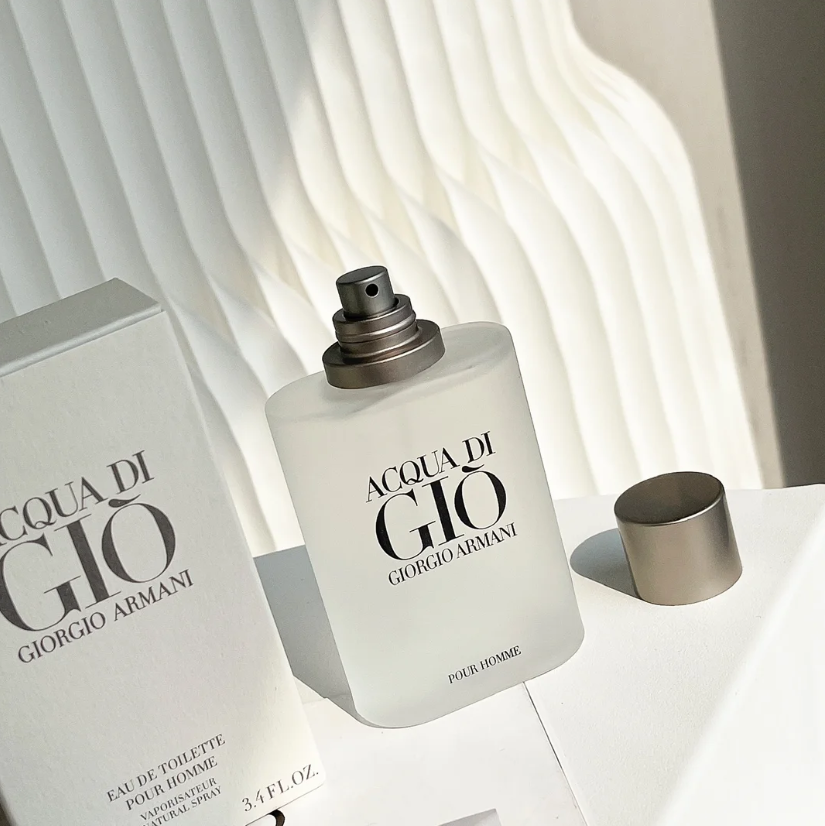
At that time, the fragrance counters were dominated by a specific kind of “clean” scent — marine, fresh, aromatic, almost sterile, like a shirt fresh out of the washing machine. From Issey Miyake’s L’Eau d’Issey (1992) and Giorgio Armani’s Acqua di Giò (1996) to Dolce & Gabbana’s Light Blue (2007), each was a milestone of its era. But within this “freshness above all” market, Chanel did something different.
They launched Bleu de Chanel.
The fragrance was created by Chanel’s then in-house perfumer Jacques Polge — father of the current perfumer Olivier Polge. It retained that familiar freshness, but refused to stop at the surface. The scent quickly shifted into a deep, woody base — sensual, warm, and distinct in character. It wasn’t just another pleasant fragrance. It was a statement.
The Scent Structure
Bleu de Chanel’s fragrance structure varies across its concentrations, each revealing a different facet.
Eau de Toilette (EDT) is the closest to the original concept. The top notes are lemon, grapefruit, bergamot, mint, pink pepper, and a touch of aldehyde — a crisp citrus burst like a cool breeze, clean and sharp. The heart is melon, jasmine, ginger, and nutmeg — fresh, with a subtle warmth. The base is labdanum, patchouli, amber, incense, sandalwood, and cedar, where the woody foundation takes over. In the perfumer’s words, this is a “woody aromatic” fragrance, where New Caledonian sandalwood intertwines with dry cedar and vibrant citrus.
Eau de Parfum (EDP) deepens the woody core. It blends New Caledonian sandalwood with amber-infused dry cedar and tonka bean. Compared to the EDT’s fresh exuberance, the EDP is warmer, more sensual. As one user described it: “It exudes warmth and contains depth, making it more versatile and better suited for colder weather.” In terms of longevity, the EDT lasts about 4 to 6 hours, while the EDP extends to 7 to 8 hours.
Parfum is the richest expression of the collection. A burst of freshness opens the fragrance, followed by the noble presence of New Caledonian sandalwood slowly unfolding. It is described as a “rich and refined woody aromatic” — for those who seek a deeper, more intense experience.
And L’Exclusif, launched in 2025, represents another breakthrough for the line. It is characterized as a “complex and intense amber aromatic” where sandalwood, amber, and labdanum are pushed to the forefront. Olivier Polge aimed to “push the woody notes further, offering a more powerful expression.” The addition of leather, amber, and resin notes gives this version a warmer, richer character.

The Bottle and Visual Language
Bleu de Chanel’s bottle design is worth noting. That deep blue is often mistaken for black — but in fact, it’s “the instant just before blue turns into black.” For Olivier Polge, this near-black blue symbolizes both the depth and projection of the scent and the core spirit of Bleu: strength, layered complexity, and narrative.
The 2025 L’Exclusif version introduced a new square bottle design, inspired by ink bottles. It presents a bolder, more assertive stance compared to the original.
Its Place in the Market
Bleu de Chanel’s significance may go beyond the fragrance itself. At a time when men’s fragrances were still largely defined by lightness and freshness, it broke convention with woody warmth and sensuality, ushering in an era of more “individual” scents. Chanel’s current head of perfume creation, Olivier Polge, once said: “Bleu was born in a period when the men’s fragrance market was undergoing a transformation.”
Today, Bleu de Chanel has grown into a full fragrance family — EDT, EDP, Parfum, and L’Exclusif. It has been described by many as a “no-fail everyday fragrance,” and others have called it a “beautiful scent you can wear anytime, anywhere.” Its longevity and sillage are solid — the EDP lasts for hours and “fills every room you walk into.”
It may not be the most unique bottle on the shelf. But it might just be the one that stands the test of time. From 2010 to today, Bleu de Chanel didn’t chase trends — it became one itself. And perhaps that’s why it’s called a “modern classic.”